

For a large part of the twentieth century, it was religious and socio-economic (class) differences that constituted the most important social divisions in the Netherlands.
Secularisation, increased prosperity, and the dismantling of those “compartments” have led to these divisions becoming less important. In recent years, other social differences have often been pointed to as new lines of division, for example those between the older and younger cohorts, between immigrants and those long established here, or between those with a lower or higher level of education. The general question addressed by this project is what the main social divisions are in the Netherlands today, to what extent we should classify them as problematical, and what can if necessary be done to counteract them. To answer this question various meetings are being organised and a number of publications will be produced.
Inequality
In the spring of 2014, inspired by the WRR Lecture ‘How much (in)equality can societies sustain?’, the WRR published the report ‘How unequal is the Netherlands? An exploration of developments in and consequences of economic inequality’ (Hoe ongelijk is Nederland? Een verkenning van de ontwikkeling en gevolgen van economische ongelijkheid).
Separate worlds?
The Investigation ‘Separate worlds? An exploration of sociocultural oppositions in the Netherlands’ (Gescheiden werelden? Een verkenning van sociaal-culturele tegenstellingen in Nederland) was published in October 2014. It examined the question of whether there are (new) sociocultural divisions in the Netherlands, and if so, what form they take. For example, to what extent is the Netherlands divided as regards the values and world view of its citizens? The Investigation was produced in collaboration with the Netherlands Institute for Social Research (SCP).
Financial self-reliance
On 30 June 2016, the WRR published the Investigation ‘Own (de)fault? A behavioural science perspective on problem debts’ (Eigen schuld? Een gedragswetenschappelijk perspectief op problematische schulden). Two background studies were also published, ‘Exploration of self-reliance’ (Verkenning van redzaamheid ) and ‘Sustainable improvement in healthy financial behaviour. Dream or reality?’(Duurzame verbetering van gezond financieel gedrag: Droom of werkelijkheid?).
Theoretical reflection
The Investigation ‘What’s wrong with social divisions?’ (Wat is er mis met maatschappelijke scheidslijnen?) was published in early 2017. When can a division be said to exist and what does it signify if a difference is described as a social division? These are the central questions addressed in this theoretical reflection.
Mental capacity
A WRR Report will also be published in 2017 on the importance of mental capacity for the self-reliance of citizens. The WRR expects to publish a summary report at a later date bringing together all the information and seeking to answer the question of which social divisions are problematic and warrant the attention of politicians.
News

What's wrong with social divisions?
The notion of ‘social divisions’ crops up regularly in the public debate, and always in a negative sense. But what are social ...
Read more
Government is overestimating financial resilience of citizens
Problem debts arise in part because the government is too optimistic about the financial resilience of citizens. This is one of ...
Read more
Working Paper ‘Societal dividing lines’
The WRR published the report ‘Continuing immigration and new societal dividing lines. An exploration of potential developments’ ...
Read moreHow unequal is the Netherlands?
The WRR Investigation ‘How unequal is the Netherlands?’ (Hoe ongelijk is Nederland?) explores differentials in income, wages and ...
Read more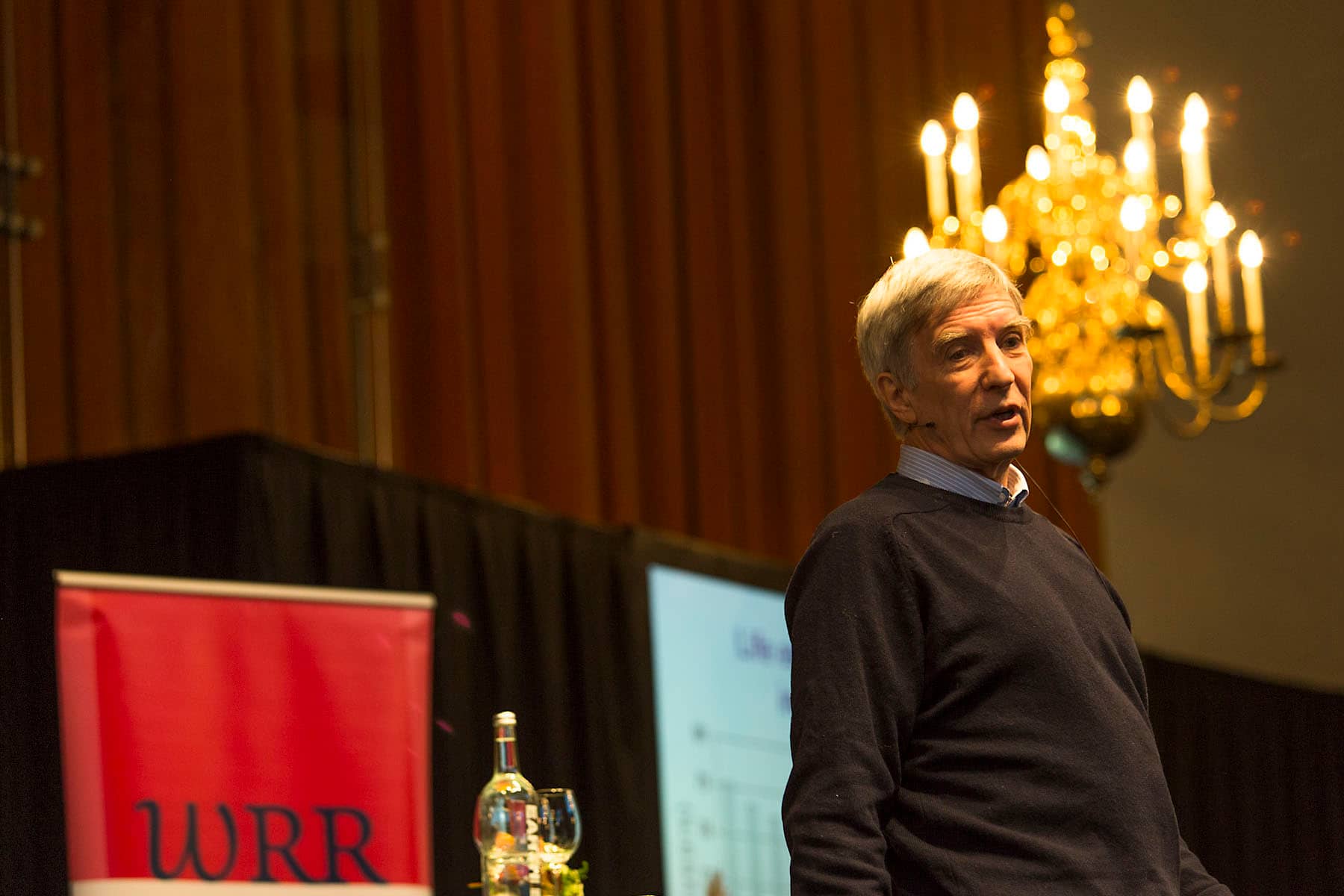
WRR Lecture 2013: How much (in)equality can societies sustain?
The theme of the WRR Lecture 2013, which took place on 28 November, was social inequality.
Read more