
This project aims to provide a useful framework for assessing the Netherlands’ policy on Europe. Such a framework does not basically model the European Union (EU) on the states from which it (partly) takes over tasks (“the superstate”), nor does it fall back on old models of intergovernmental cooperation that can become deadlocked at any time (“a pigeon coop”).
Research and reporting will provide leads for productive discussion on the further development of the relationships between the EU Member States and on the extent to which the current structures of the EU are sufficient. The project is based on three questions:
- Why and to what extent can the European level of legislation and administration contribute to governance regarding important public tasks?
- What implications does this have for the desirable structure of the legislative process as regards these tasks, for potential differentiation in the relationship between the Member States and the European Union, and for the institutional structure of the EU?
- What is the significance of this for the Netherlands’ policy on Europe?
Democratic legitimacy
As its reference points, the project takes not the existing structures of the EU – although it is naturally on them that one must build – but the social and economic needs for policy and regulation. This study – in line with the WRR Report Decisiveness in the pan-European Union (Slagvaardigheid in de Europabrede Unie, 2003) and the WRR Report Rediscovering Europe in the Netherlands (Europa in Nederland, 2007) – will also take account of a wide range of types of governance, in other words not only the possibility of (new or revised) EU directives and regulations. Those types of governance will be able to play a role depending on their policy-related effectiveness, legitimacy, and relationship to promoting the interests of the Netherlands. Such issues are also relevant to the expectations regarding elections and democratic representation: is the point merely for people to go out and vote, focused on majority decisions, or is it broader and more continuous participation on the part of citizens? The five-yearly elections to the European Parliament and the extension of its powers have not, after all, proved sufficient to eliminate the lack of actually experienced democratic legitimacy.
European primacy
Analysis will deal not only with the question of which policy fields demand a European component or even European primacy – and if that is the case, in what way – but also with the question of which Member States should be involved, and to what extent the powers and decision-making processes can be tailored accordingly. The project will be introduced in phases during the current term of office of the Council, with interim conferences and/or publications giving findings.
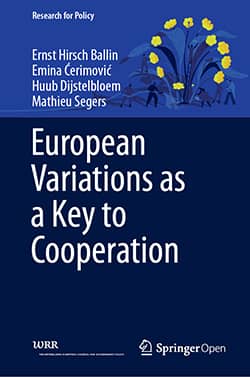
Image: © Springer
European Variation as a key to cooperation
European variations as a Key to Cooperation, which sets out how the 30 member states of the European Union can continue to work together in a productive and constructive manner, and the extent to which this cooperation should or should not focus on bringing about uniformity. Variation provides the space and flexibility to work together to achieve security, stability, prosperity and social protection. European variations as a key to cooperation published by Springer, an international scientific publishing house. You can order a hardcopy for a set price or download the ebook version freely available through open access via the Springerwebsite. A summary of this publication can be obtained here.

(An animation.)
VOICE-OVER: Since its founding
the European Union has experienced decades of increasing cooperation.(A timeline with photos.)
The idea exists that the EU is organising a growing number of tasks and powers
at the supranational level.
Some supporters see this as an inevitable development.
Pursuing the ideal of a federal Europe,
with every country being a member state and all legislation being harmonised.
As a result of various developments, however, the EU is under pressure.
After all, opposing tendencies are becoming increasingly visible.
A growing number of people see this ideal image more as a threat.
They wish to return tasks and powers to the nation states,
which subsequently coordinate all cross-border issues
at an intergovernmental level.
Does this one-dimensional view do justice to reality?
The answer is no.
In fact, there are endless forms of variation possible within the EU,
if you take a three-dimensional approach.
Policy content.
Decision-making.
And membership.
These dimensions and the variations within the EU
are not theoretical or hypothetical.
Several examples can be found within the EU treaties.
And when the EU treaties are amended, the variation increases.
When you consider this wealth of variation,
letting go of the fixation on greater uniformity or on national interest
appears to offer new opportunities for a debate
about the future of European integration.
A debate that does greater justice to reality than one-dimensional ideal types.
Variation in policy content, decision-making and membership
proves to be a strength, rather than a weakness.
A Union that offers unity in diversity is a Union offering a future.(On-screen text: WRR, Scientific Council for Government Policy. www.wrr.nl.)
TRANQUIL MUSIC
News
European Variations as a Key to Cooperation
The European Union will have to offer more room for variation. That is the main thrust of ‘European Variation as a Key to ...
Read more
WRR discussion paper: Strengthening EU Policy
The European Union in the coming years must evolve on numerous fronts. The Covid-19 pandemic has revealed the necessity of ...
Read more
‘European Variations as a Key to Cooperation’ in International Springerseries
The Netherlands Scientific Council for Government Policy (WRR) and Springer published a new title in the series 'Research for ...
Read more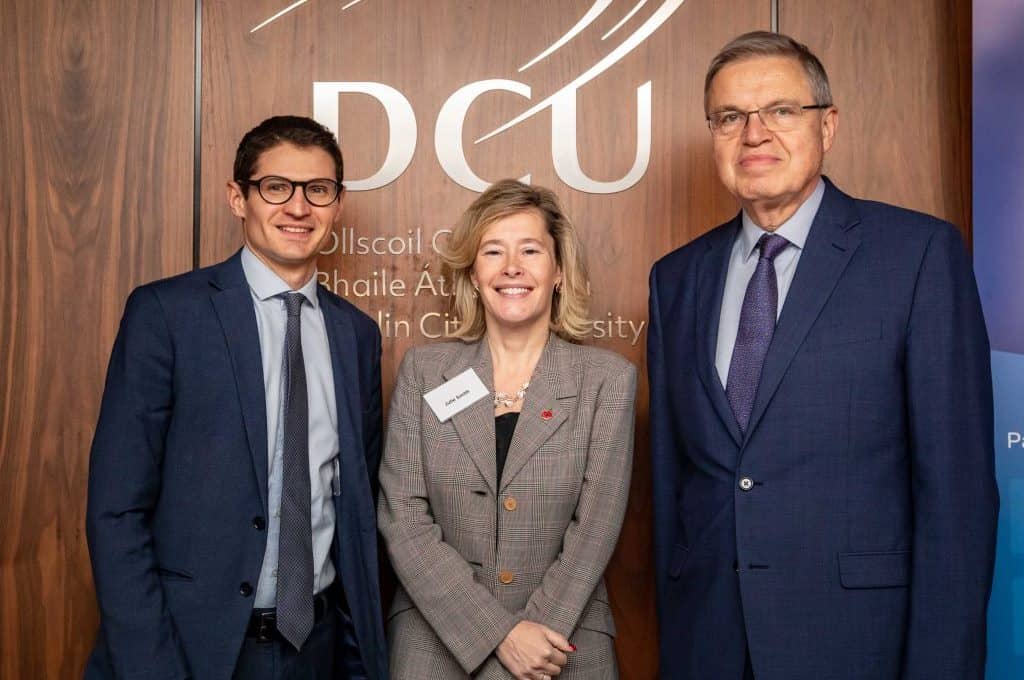
The future of the European Union
‘European variations are the key to cooperation’, argued Professor Ernst Hirsch Ballin at the first conference of the BRIDGE ...
Read more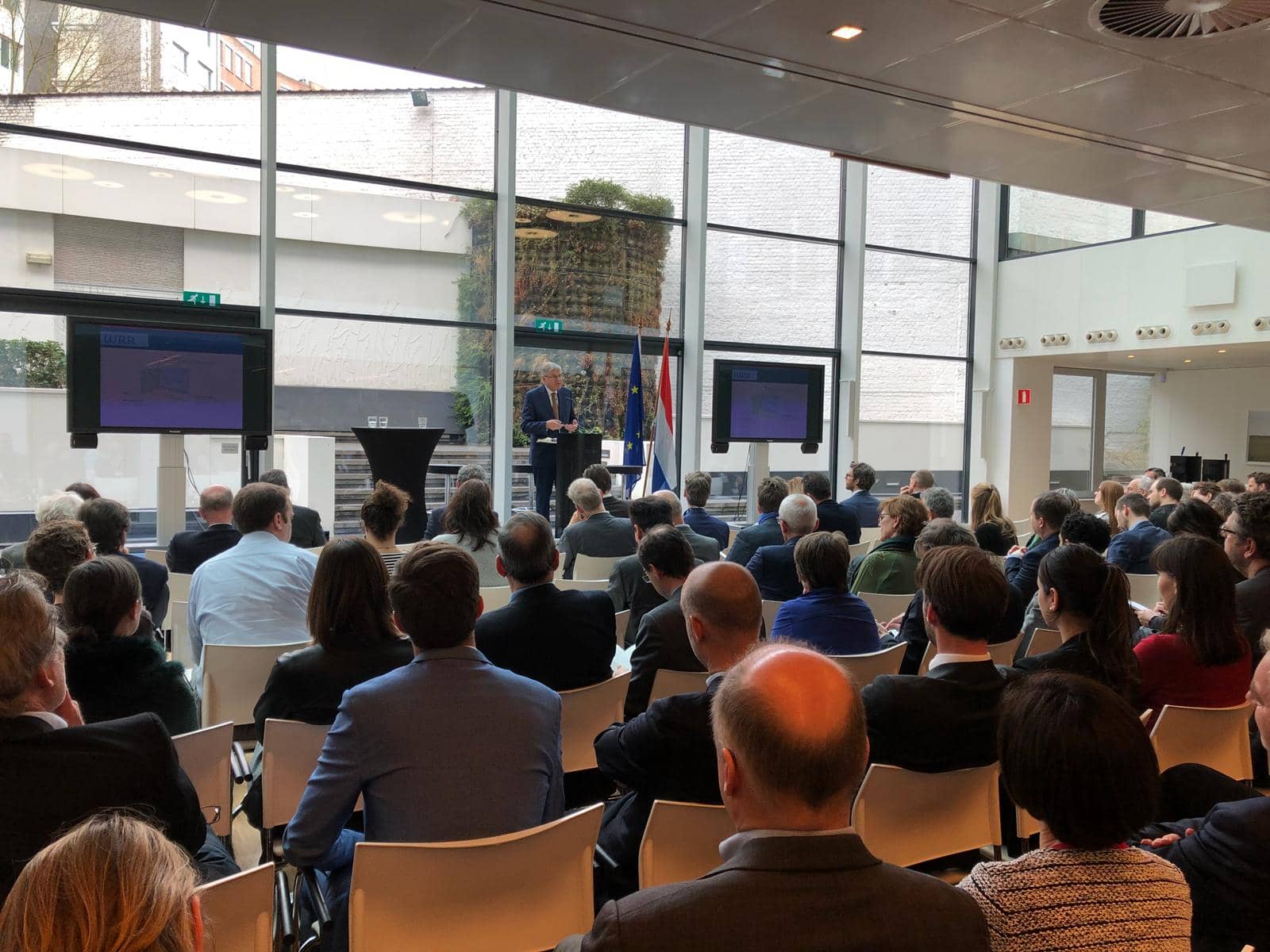
Europe Report draws attention in Brussels
We cannot expect everyone to think the same way in a Union with nearly 30 members. So how can the European Union answer the need ...
Read more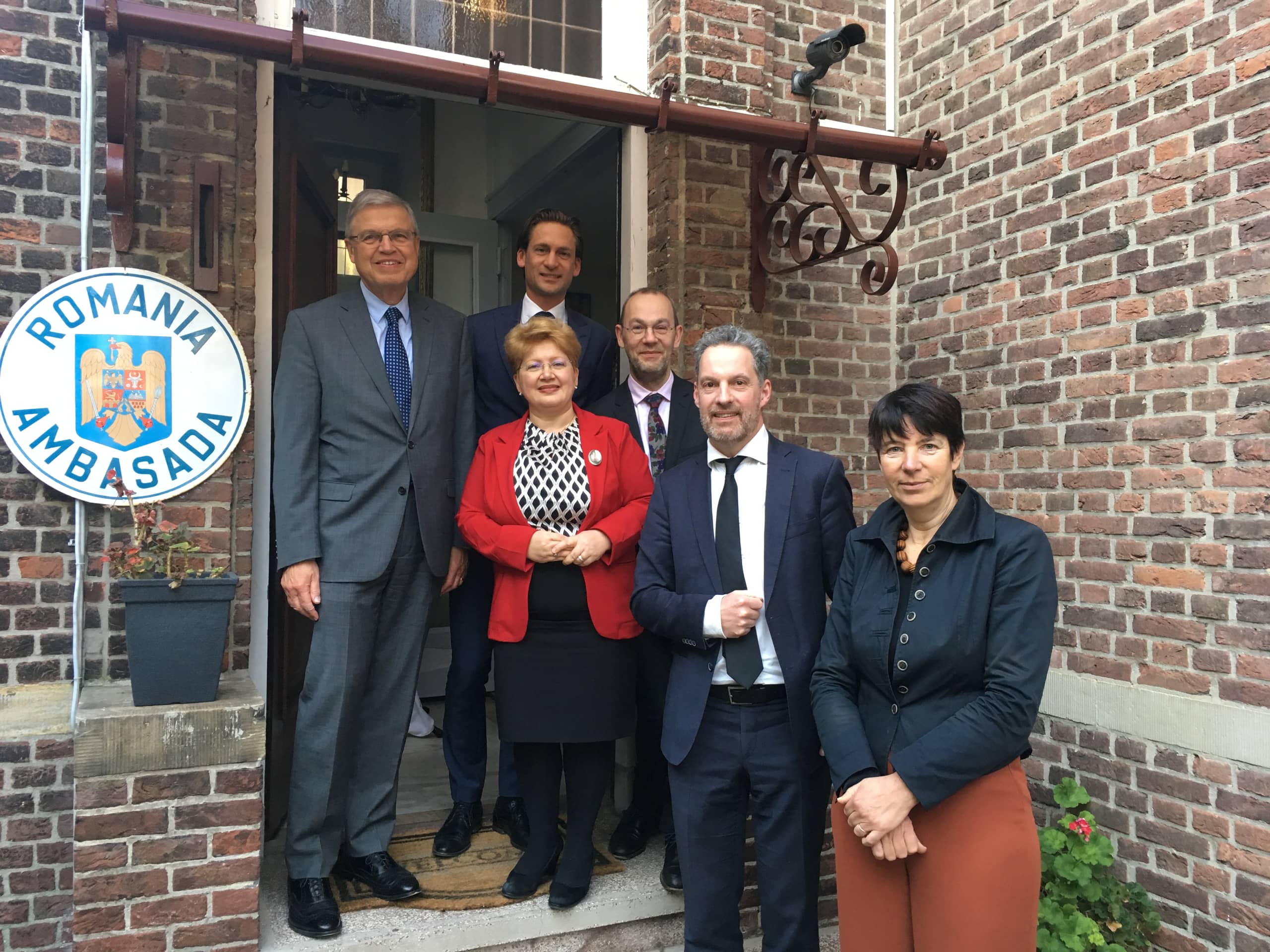
Diplomatic The Hague most interested in European Variation
On Tuesday 26 February 2019, the WRR and the Embassy of Romania (this semester’s President of the EU Council) organised a meeting ...
Read more